
FOR IMMEDIATE RELEASE
Media Contact
Abby Mattson, Director of Development & Communications
amattson@wetlands-initiative.org
224-406-6233
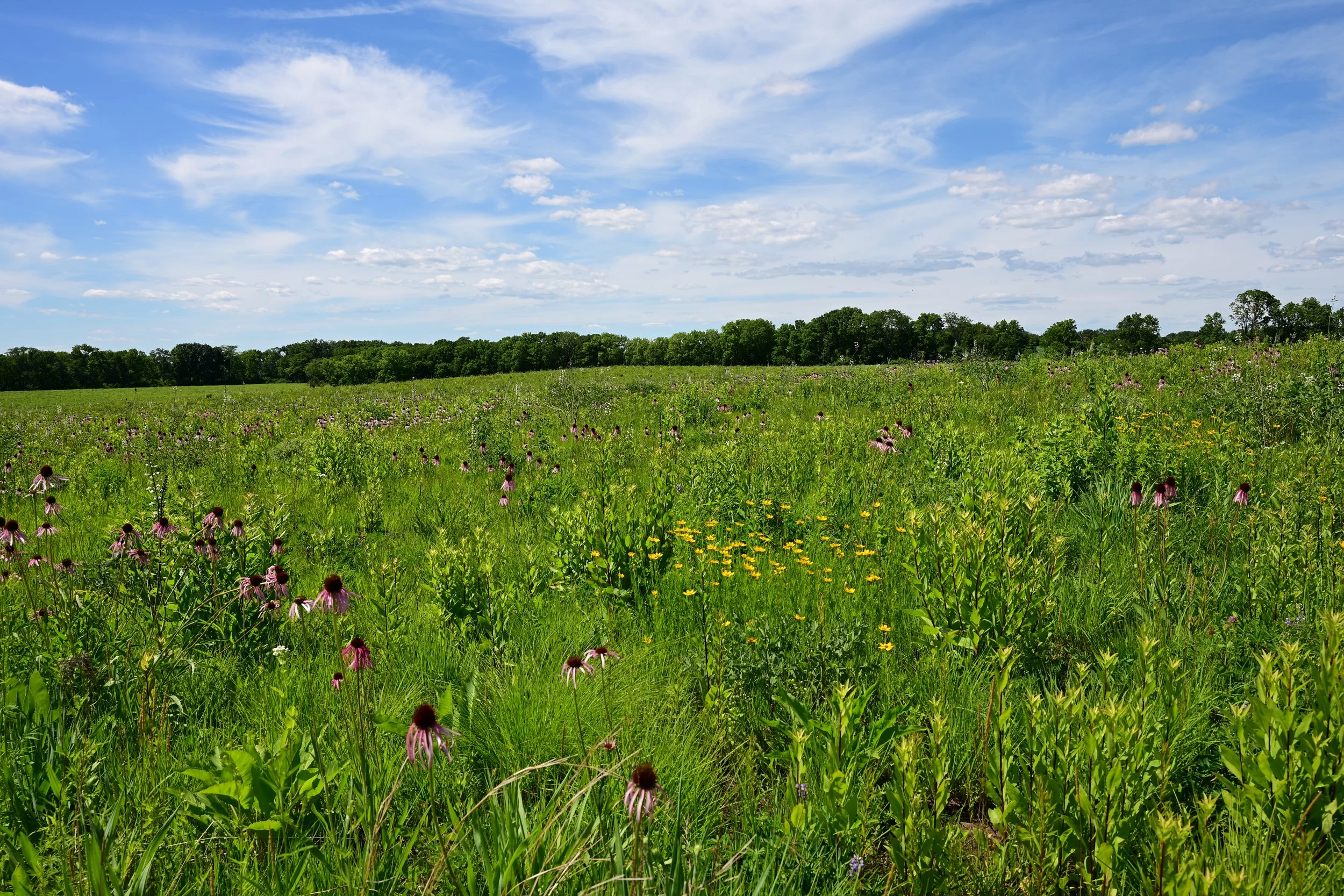
CHICAGO (June 22, 2026) - The Wetlands Initiative is honored to announce that on May 19, 2026, the Illinois Nature Preserves Commission approved the final dedication of Sandy Hollow as a nature preserve buffer addition to the Thomas W. and Elizabeth Moews Dore Seep Nature Preserve. This dedication permanently protects Sandy Hollow’s 352 acres of restored prairie, savanna, woodland, and floodplain habitat within the Sue and Wes Dixon Waterfowl Refuge in Putnam County. The dedication safeguards the site in perpetuity and recognizes its importance to both biodiversity conservation and groundwater protection in the Illinois River Valley.
Sandy Hollow borders the Thomas W. and Elizabeth Moews Dore Seep Nature Preserve, a rare groundwater-fed natural area known for its unique seep communities and specialized plant species. The newly dedicated Sandy Hollow nature preserve buffer encompasses much of the groundwater recharge area that feeds the Dore Seep, helping protect the quality and quantity of water flowing into this sensitive ecosystem.
“We are thrilled with the Illinois Nature Preserves Commission’s decision to permanently protect Sandy Hollow at the Sue and Wes Dixon Waterfowl Refuge,” said Paul Botts, President and Executive Director of The Wetlands Initiative. “Visitors adore Sandy Hollow for its beauty and floristic diversity, and this dedication demonstrates its ecological importance.”
The Wetlands Initiative (TWI) acquired the primary Sandy Hollow property in 2014, when much of the site was being used for row-crop agriculture. Since then, staff and volunteers have transformed the landscape through native seeding, prescribed fire, invasive species control, and selective tree removal. Today, Sandy Hollow supports a diverse mosaic of sand prairie, mesic prairie, oak savanna, oak-hickory woodland, and floodplain forest habitats.
The restoration has resulted in the establishment of numerous conservative native plant species and several state-listed species, including downy painted cup (Castilleja sessiliflora), yellow wild indigo (Baptisia tinctoria), royal catchfly (Silene regia), prairie spiderwort (Tradescantia bracteata), and large-flowered beardtongue (Penstemon grandiflorus). Astonishingly, upwards of 500 vascular plant species have been documented on the site.
George Covington, who currently serves on TWI’s Board of Directors and is a former Chair and longtime Commissioner for the Illinois Nature Preserves Commission, has been involved with Sandy Hollow since its acquisition. “The dedication of Sandy Hollow as a buffer addition to the pristine Dore Seep Nature Preserve is a testament to the superb restoration work on which TWI has built its reputation. No Preserve exists in isolation, and the addition of this buffer which protects much of the upland recharge zone for the seep is based on and demonstrates TWI's unified approach to ecological management, as clearly shown at the Dixon Waterfowl Refuge and recognized by its addition to the nature preserve system,” said Covington.
Nature preserve buffer dedication is one of the highest levels of land protection available in Illinois. While TWI retains limited rights necessary for ongoing land management and public access, the dedication ensures that the site's natural resources will remain protected and managed for conservation purposes in perpetuity.
In addition to its ecological value, Sandy Hollow provides opportunities for public recreation, environmental education, birdwatching, hiking, and nature appreciation through a network of trails and visitor amenities maintained by TWI and open to the public 365 days a year.
On Saturday, July 18 TWI is holding a guided hike and seed collection event at Sandy Hollow to celebrate the site’s dedication. This event is free and open to the public, and more information can be found at www.wetlands-initiative.org/upcoming-events.
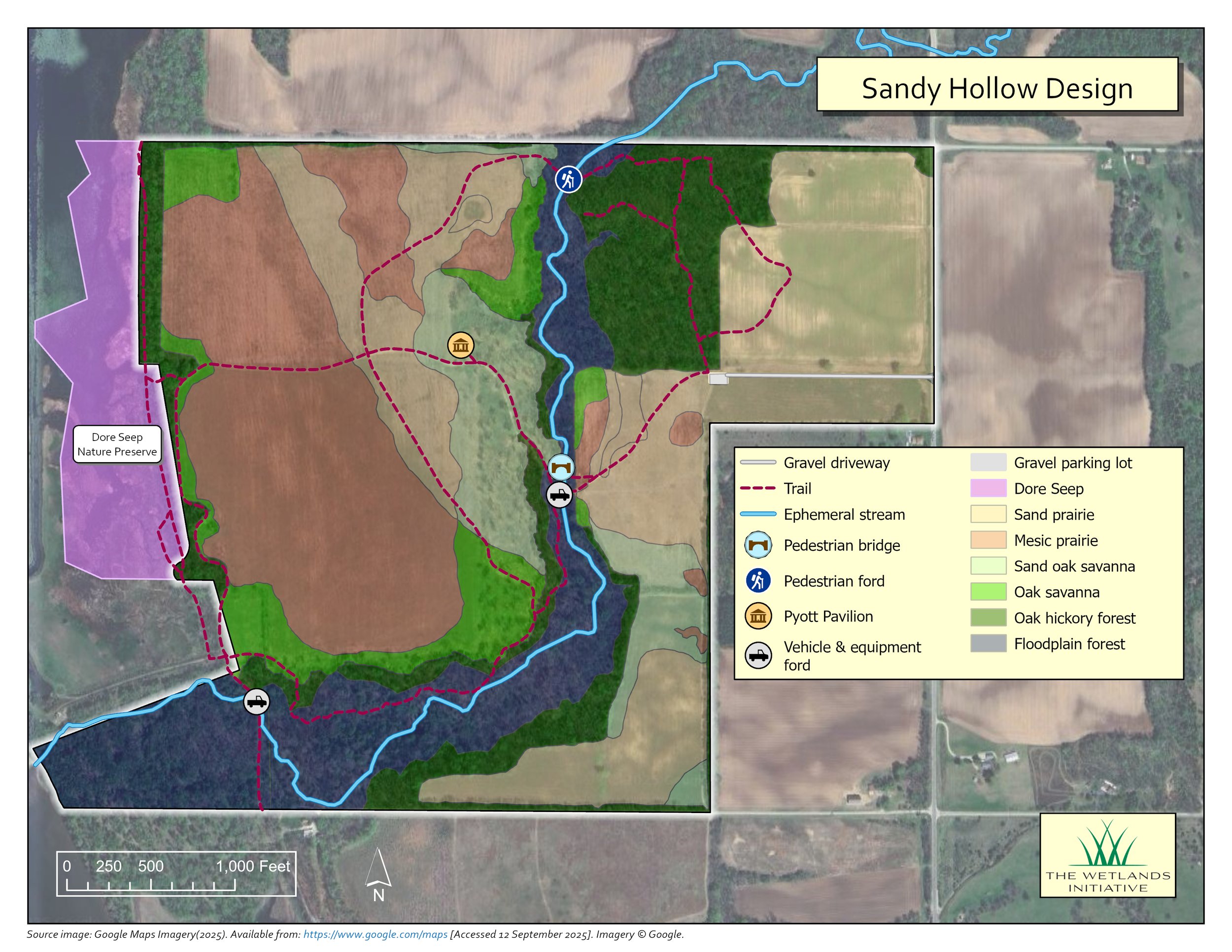
TWI thanks the Illinois Nature Preserves Commission, the Illinois Department of Natural Resources, its staff and volunteers, supporters, and partners whose vision and dedication made the permanent protection of Sandy Hollow possible. In particular, we are grateful to the following generous donors who helped make the restoration of Sandy Hollow possible: Dave and Marg Grohne, Sue Dixon, John and Emily Alexander, The Buchanan Family Foundation, Withrow W. Meeker, Mr. and Mrs. H. Safford Peacock, Steve and Ann Ryan, Marion S. Searle, and Dick and Liz Uihlein. We are also grateful to the following funders of the Sandy Hollow acquisition and restoration project: Dr. Scholl Foundation, Ducks Unlimited and the federal North American Wetlands Conservation Act, Dynegy Hennepin Power Station, Grand Victoria Foundation, Illinois Clean Energy Community Foundation, the Federal Neotropical Migratory Bird Conservation Act, and Oberweiler Foundation. Bridge financing was provided by The Conservation Fund.
###
About The Wetlands Initiative
Founded in 1994, the Wetlands Initiative’s (TWI) mission is to design, restore, and create wetlands. We innovate, collaborate, and employ sound science to improve water quality, habitat for plants and wildlife, and our climate. With a current geographic focus on Illinois and Northwest Indiana, TWI is the only nonprofit organization in our region dedicated to bringing back wetland ecosystems for the range of vital natural services they provide people and the broader environment. We envision a world with plentiful healthy wetlands that sustain biodiversity and human well-being. Visit www.wetlands-initiative.org for more information.