
Restoring Southeast Chicago Wetlands

Just fifteen miles south of downtown Chicago, on the city’s Far Southeast Side, sits historic Lake Calumet, the largest lake within city limits. And most people have never seen it.
For much of the late 19th and early 20th centuries, Lake Calumet was at the center of Chicago’s industrial empire. Unfortunately, that came at a cost. The surrounding wetlands were filled, dredged, and written off. Sites that weren’t paved over became dumping grounds for slag (a byproduct from smelting) and industrial waste. By the time this major industrial boom had receded, much of the area remaining natural areas had been fenced off, degraded, and cut off from the communities that had lived in surrounding neighborhoods for generations.
Alongside local partners, the Wetlands Initiative is working to change that. Currently, we’re combining ecological science with hands-on engineering at two sites near Lake Calumet. The conditions at Indian Ride Marsh North and Square Marsh allow TWI to try new methods to tackle some of the most challenging restoration work in the region. The result will be more than just healthy habitat. It will be open, accessible green space on Chicago’s Southeast Side, and a new chance for a lot more people to see what wetlands have to offer.
Indian Ridge Marsh North (Park no. 565)
113 acres | restoration began: 2016 | Open to visitors
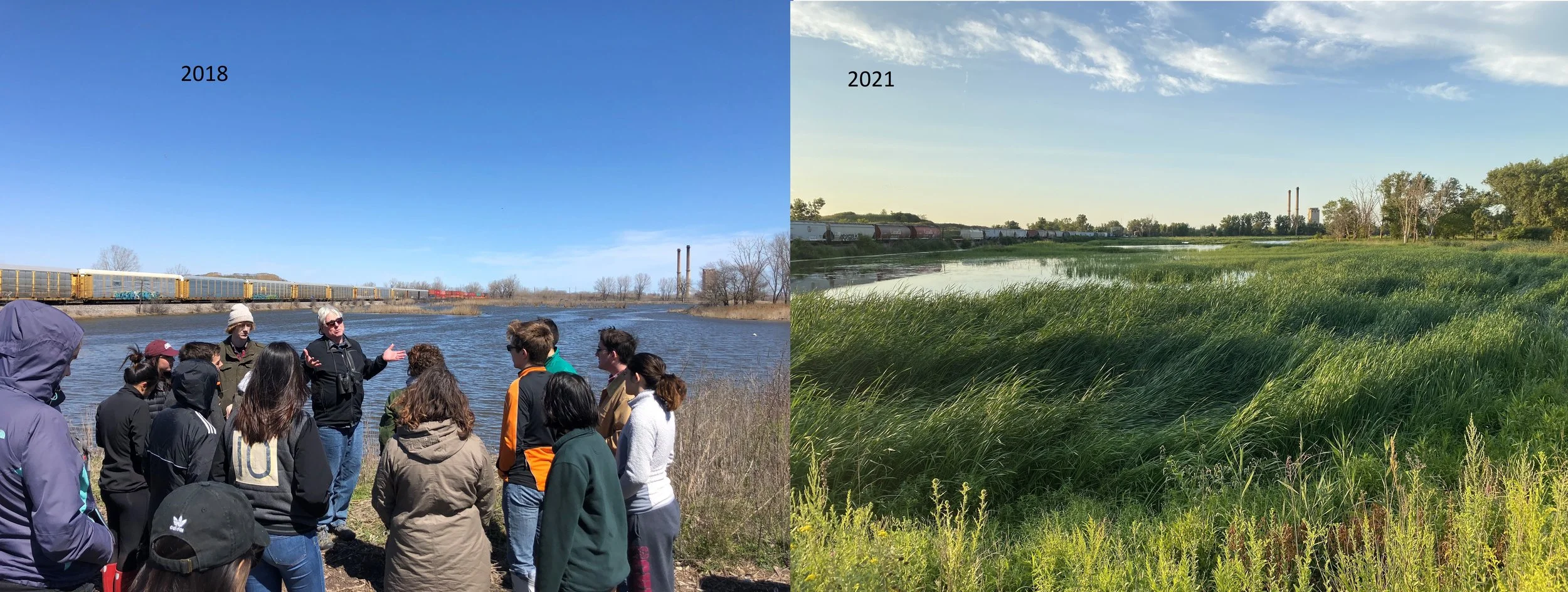
Indian Ridge Marsh North is a Chicago Park District site at the center of a vast wetland complex that includes Indian Ridge Marsh South, SEPA Station, Big Marsh, Deadstick Pond, and Square Marsh. This web of interconnected wetlands is part of what made Indian Ridge Marsh North a priority for restoration, and part of what makes progress there matter far beyond it’s explorable 113 acres.
When TWI, Chicago Park District, and Audubon Great Lakes began work in 2016, the site already had a history worth noting. It was once home to a large colony of breeding Black-crowned Night Herons, and it also holds a unique place in botanical history. It’s where Thismia americana, the only flower to be endemic to Chicago, was discovered and documented. Indian Ridge Marsh North’s incredible past makes it’s present-day degraded condition all the more unacceptable and its restoration compelling.
Did you know?
Thismia americana is Chicago’s phantom plant. Discovered in 1912 by University of Chicago graduate student Norma Pfeiffer in Indian Ridge Marsh, the tiny, nearly translucent flower hasn’t been seen since 1916! Although broadly considered to be extinct, many believe it still could be found in Chicago’s Southeast Side. Over the years, TWI has organized community hunts for the elusive plant at Indian Ridge Marsh North. So far, no luck. But the search continues!
Aside from reestablishing hemi-marsh, one of TWI’s most significant contributions at Indian Ridge Marsh North is a shoreline modification technique developed and successfully implemented in 2021.
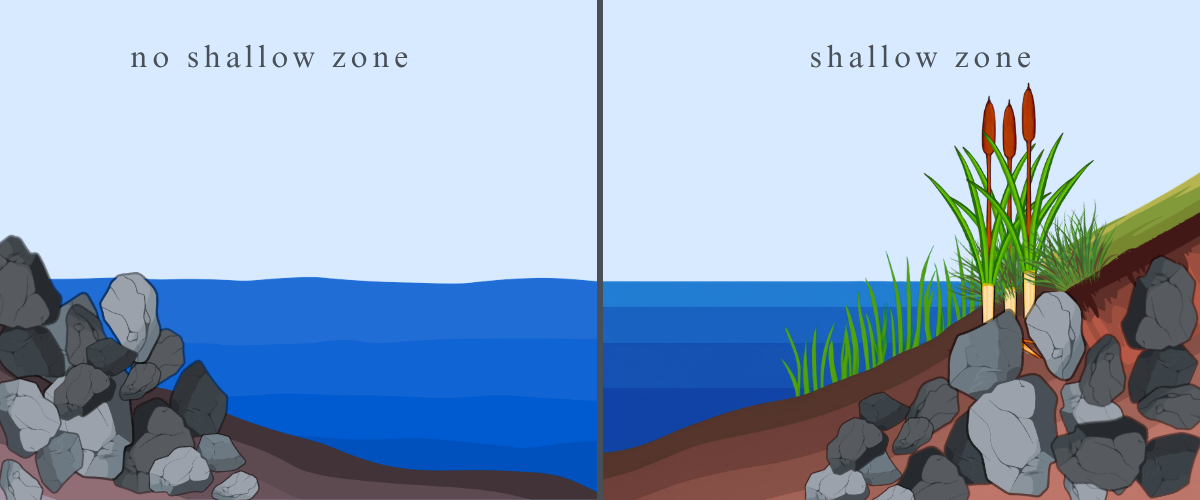
When a shoreline drops too steeply from upland down to open marsh, there is very little shallow zone where emergent marsh plants can take hold. The lack of a transitional shoreline (littoral zone) means little to no habitat for wildlife, such as macroinvertebrates, amphibians, and marsh birds, to forage, seek shelter from predators, or lay eggs.
At Indian Ridge Marsh, TWI used clay-rich soil to reshape the harsh banks of slag and debris into gradual slopes, creating the shallow zones marsh plants, secretive marsh birds, and other wildlife need to thrive. It’s a straightforward idea with powerful results. For example, the latest marsh bird monitoring found marsh birds at more locations at IRM than the year before.
Learn more about marsh bird monitoring at the Marsh Bird Monitoring Hub at Audubon Great Lakes
Square Marsh
184 acres | restoration began: 2023
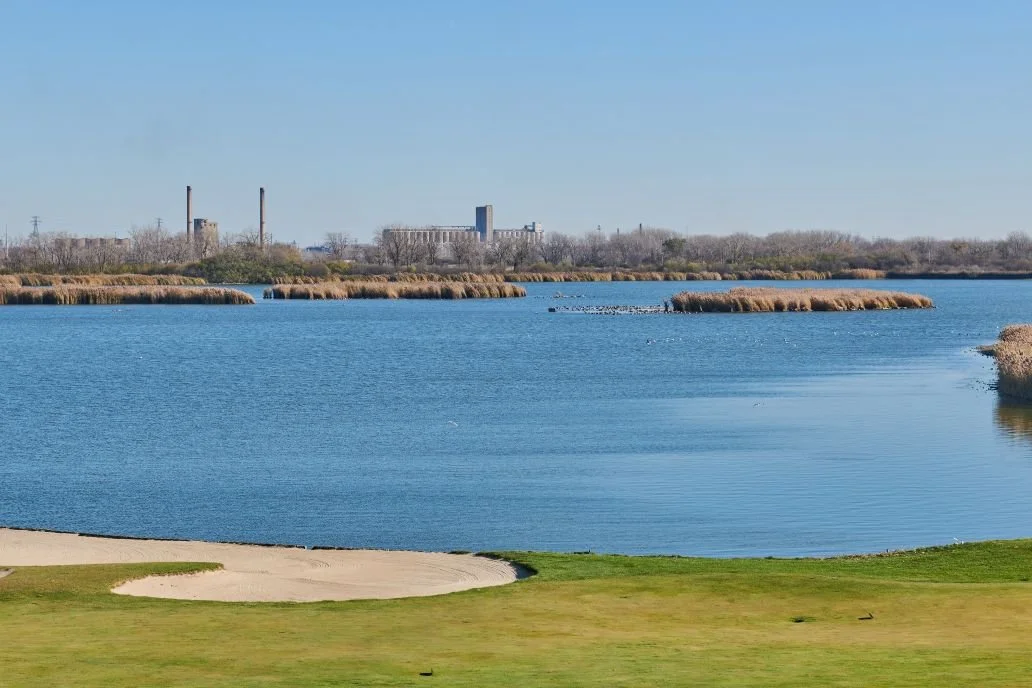
For decades, Square Marsh was fenced off from the communities that surround it, used as a dump site and left to degrade while the rest of the Lake Calumet area changed around it. Invasive common carp took over, destroying most native wetland plants, and turning the water murky. As TWI executive director Paul Botts puts it, “no one living has ever seen Square Marsh as anything but a muddy mess.”
That’s exactly why it matters so much to get it right.
Square Marsh is a remnant of historic Lake Calumet itself, making its restoration one of the most significant opportunities in the region. At 184 acres, it’s also one of the largest natural areas left around Lake Calumet. TWI is working here in partnership with The Nature Conservancy and the Illinois International Port District. It’s a partnership bringing together ecological expertise and the institutional access needed to tackle a site that has been off limits for generations.
Restoration at Square Marsh began in 2023 and remains in its early stages. Work to date has included invasive plant treatment, prescribed burning, and replacing the site's water control structure, enabling better management of water levels. Upcoming phases will focus on recontouring portions of the marsh bed and managing invasive carp. Our long-term vision includes restored habitat, new public access, and trail connections linking Square Marsh to the broader network of natural areas around Lake Calumet.
For a site no one has been able to visit in decades, that’s no small thing.
Returning to What Once Was
What’s happening at Indian Ridge Marsh North and Square Marsh isn’t just ecological restoration. It’s the return of land that was taken out of public life for generations, given back as green space, open water, and thriving habitat. Lake Calumet is still largely unknown to most Chicagoans but these two sites are starting to change that.
Southeast Chicago News and Updates

The Wetlands Initiative is working closely with Audubon Great Lakes, the Chicago Park District, and other partners on a conservation action planning effort that will inform restoration and management of important remnant wetland sites in the Calumet area.